Why a “Free” Parts Store Scan Isn’t Real Auto Diagnostics in Canton, CT
Getting a code from a parts store and getting a real diagnosis are two very different things, and confusing them is one of the most common reasons a repair does not hold. At Collinsville Auto Repair in Canton, CT, our trained technicians start where the code ends, using professional testing to find what caused the fault. This post walks through how code scans work, what real testing time involves, and why skipping that step almost always ends up costing more than the testing itself.
What a Code Scanner Tells You
A code scan is simply the starting point in the process of finding out what is causing your vehicle’s problem.
When a code reader is plugged into your vehicle’s OBD-II port, it pulls a stored fault code, something like P0301. Think of that trouble code as a clue. It tells us which system is reporting a problem, but it does not tell us exactly what failed or why it failed.
A scan tool may point us toward a sensor, circuit, or vehicle system, but determining the actual cause requires testing, inspection, and analysis. In many cases, several different issues can trigger the same code.
A trouble code tells us the neighborhood where the problem exists. Professional testing identifies the exact address.
Code Scan vs. Professional Auto Diagnostic: What's the Difference
| Category | Free Parts Store Scan | Professional Diagnostic at Collinsville Auto Repair |
|---|---|---|
| What it does | Reads stored fault codes | Identifies which specific component failed and why |
| What you get | A starting point: which system is affected (e.g., P0301) | A confirmed answer: which specific component failed, with a repair recommendation |
| Equipment used | Basic OBD-II reader | Snap-On scanner, Autel scanner, Autel Scope |
| Who performs it | Parts store employee | Trained automotive technician |
| Can it fix the problem? | No | Leads to the actual repair |
| Risk | Replacing parts that aren't broken | None. You know what is wrong before spending. |
That is the difference between knowing a system is affected and knowing which specific component failed.
Why Guessing Gets Expensive
Replacing parts based solely on a code can quickly become an expensive guessing game.
Take a P0171, a “system too lean” code. That single code can be triggered by a vacuum leak, a dirty mass airflow sensor, a weak fuel pump, or a clogged injector. If you replace the oxygen sensor because the code looked like an O2 issue, and that was not the cause, the light comes right back on.
Plenty of drivers in Canton and across the Farmington Valley have spent money on parts that did not fix anything because the real problem was never properly tested. Investing in proper testing can save money, prevent unnecessary repairs, and help ensure your vehicle is repaired correctly the first time.
If your check engine light has come back on after a parts store reset, the issue was never identified. The system is doing exactly what it is designed to do: alerting you that the problem is still there.
Questions about what your vehicle needs? Schedule an appointment with Collinsville Auto Repair by calling (860) 693-4588 or stopping by 146 Powder Mill Road, Canton, CT 06019.
What Professional Auto Diagnostic Testing Involves
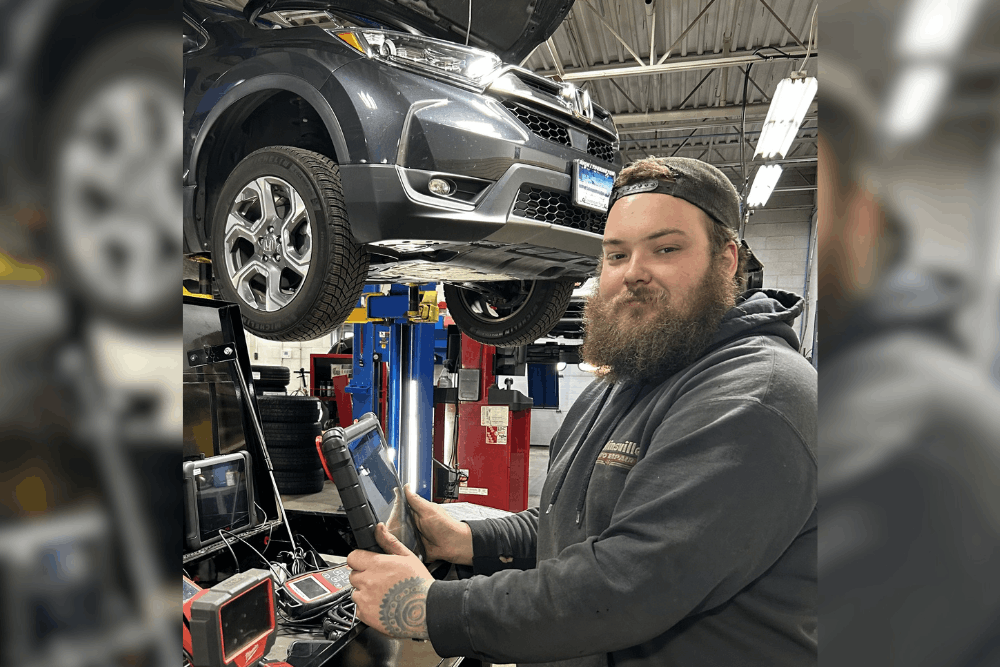
Our technicians use advanced equipment, manufacturer information, and years of experience to uncover what is really causing the concern. The goal is to find the correct solution, not simply replace the part mentioned by a code.
When your vehicle comes in, our trained technicians use the fault code as a starting point, then dig into the actual cause. For a misfire like P0301, that process includes:
- Testing spark plug condition
- Evaluating ignition coil output
- Checking cylinder compression
- Reading live fuel trim data
We use Snap-On and Autel scanners along with an Autel Scope to run real component tests and watch how your engine behaves in real time, not just what it stored in memory.
At Collinsville Auto Repair, the goal is never to hand you a code and send you on your way. It is to give you a clear, honest answer: this is what failed, and this is how we fix it.
FAQs About Auto Diagnostics
What is the difference between a code reader and a diagnostic tool?
A code reader pulls a stored fault code that tells you which system is reporting a problem. A diagnostic tool allows a technician to perform testing, inspection, and analysis to identify exactly which component failed and why. One gives you a starting point; the other gives you an answer.
Can an auto parts store fix my check engine light?
Auto parts stores can read the fault code that triggered your check engine light, but they cannot perform the testing needed to identify or repair the underlying issue. Without proper testing, there is no way to confirm what actually failed or what repair is needed.
How much does a professional car diagnostic cost?
Diagnostic costs vary depending on the vehicle and the complexity of the concern. Investing in proper testing typically saves money by identifying the exact repair needed upfront, rather than replacing parts based on a code alone. Contact Collinsville Auto Repair to schedule an appointment and our team will walk you through the process.
Schedule Your Auto Diagnostics in Canton, CT, Today
Ready to get a real answer? Schedule your auto diagnostic service with Collinsville Auto Repair at 146 Powder Mill Road, Canton, CT 06019, or call (860) 693-4588. We also serve drivers from New Hartford and Barkhamsted. Qualifying repairs are backed by the ProVantage 3-Year/36,000-Mile Nationwide Warranty, and free all-wheel drive loaner vehicles are available while we work on your vehicle.
Recent Blogs: