Brake and Tire Inspection in Canton, CT: Why Spring Rain Makes It Critical
April in Canton feels like a relief after a long winter. But wet spring roads bring their own risks, and not every vehicle is ready for them. At Collinsville Auto Repair, this is one of the most common things we talk to customers about this time of year.
When roads get wet, two things make the biggest difference: tire tread depth and brake condition. That’s why scheduling a brake and tire inspection is one of the smartest steps you can take before the next rainstorm rolls through Canton, CT.
The Risk That Catches Drivers Off Guard in Spring
Most people associate dangerous driving conditions with snow and ice. Spring rain doesn’t get the same attention, but it should.
When rain falls on roads that have been dry for a while, oil, dust, and debris rise to the surface and create a slippery film. Add heavier rainfall on top of that, and you have conditions where tires and brakes are working harder than most drivers realize.
Hydroplaning occurs when water builds up between your tires and the road faster than the tires can displace it. Your tires lose contact with the pavement, and steering and braking become unreliable in an instant. The best protection comes down to two things: tire tread and brake condition.
Why Tire Tread Is Your First Line of Defense in the Rain
Those grooves and channels in your tires are designed to push water away from the contact patch. When tread depth is low, water has nowhere to go, and the chance of losing traction increases quickly.
- 4/32″ or more: Good wet-weather traction for most driving conditions
- 3/32″: Wet grip reduces noticeably, worth having a technician take a look
- 2/32″: Legally worn out in most states and unsafe in the rain
- Below 2/32″: Tire replacement should not be delayed
Uneven wear across all four tires matters just as much as overall depth. A trained technician measuring all four gives you the full picture.
What Wet Roads Do to Your Braking System
Moisture on the rotors can briefly delay your initial braking response, especially after your vehicle has been sitting in the rain. If your pads are already worn thin, that delay gets longer, and the stopping distance grows with it.
Signs your brakes may need attention before spring
- Squealing or squeaking when you press the pedal
- A grinding noise, especially at lower speeds
- The vehicle pulling to one side when stopping
- A soft or spongy pedal feel
- Stopping distances that feel longer than they used to
These signs on a dry road are worth addressing. On a wet road in April, they become a real safety concern.
What a Brake and Tire Inspection Covers at Our Shop
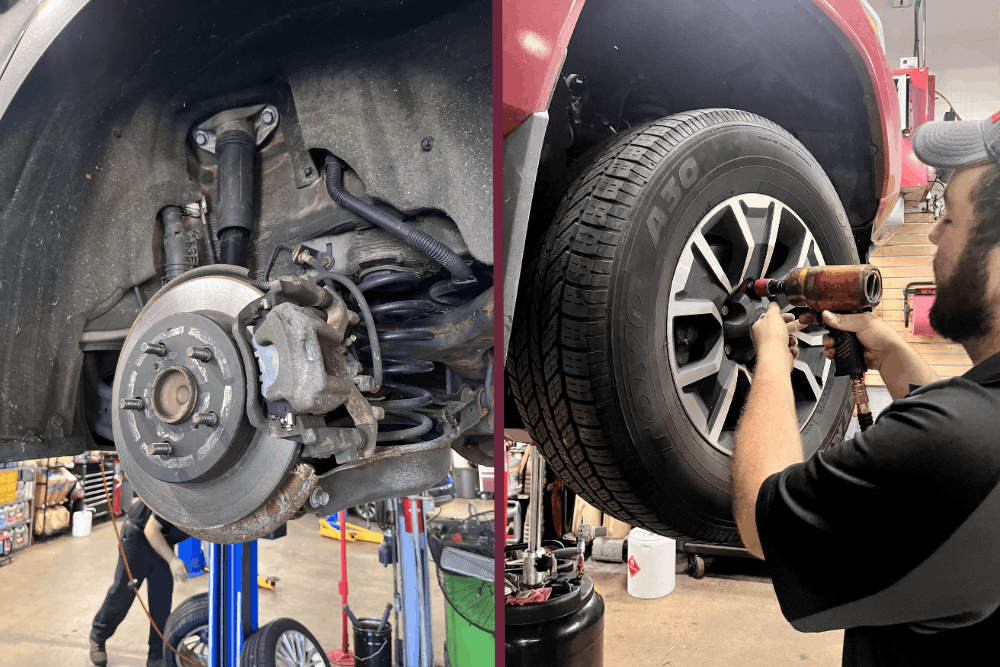
When you bring your vehicle to Collinsville Auto Repair, our trained technicians go through the full system.
A complete brake inspection includes:
- Pad thickness on all four wheels
- Rotor condition and surface wear
- Brake fluid level and quality
- Caliper function and hardware condition
- Brake lines for signs of wear
Whether you’re heading to work, getting the kids to practice, or making a run up Route 44, you need to know your vehicle is going to stop when you need it to. These are the kinds of things we catch before they become a problem on a wet road in April.
On the tire side, we check tread depth across all four tires and look for uneven wear patterns that could point to an alignment issue.
Every vehicle also receives a courtesy inspection at no additional cost. We will walk you through exactly what we found and what it costs. No pressure, no guesswork, just honest answers from people who genuinely care about keeping your family safe.
If you’re not sure where your brakes or tires stand, give us a call at (860) 693-4588 or stop by 146 Powder Mill Road, Canton, CT 06019. We work by appointment, so calling ahead makes it easy.
Why Families in Canton, New Hartford, and Barkhamsted Trust Us
We have been working on vehicles in Canton since 2005. This is a family-run shop, and we treat every vehicle like it belongs to someone we care about, because behind every car is someone who matters.
- ProVantage 3-Year/36,000-Mile Nationwide Warranty: Qualifying repairs are covered whether you are driving locally or across the country.
- Free All-Wheel Drive Loaner Vehicles: Your day does not have to stop just because your vehicle does.
- Trained Technicians: Our team trains regularly to stay current with the vehicles and services our customers depend on.
- After-Hours Drop-Off: Secure key drop at 146 Powder Mill Road, Canton, CT, means you can fit a visit in without rearranging your whole day.
- Reported to CARFAX: Every service is documented, so your vehicle history stays accurate and complete.
FAQs About Brake Repair and Tire Safety in Canton, CT
Does spring weather affect brake fluid performance?
Yes. Temperature swings between winter and spring can allow moisture to work into brake fluid over time, lowering its boiling point and reducing braking effectiveness. Having it checked as part of a spring inspection is a step many drivers overlook.
Is it safe to drive on tires that passed inspection last fall?
Not necessarily. Tires can wear unevenly or develop issues over a winter of cold temperatures and road salt exposure. A fresh inspection in spring confirms they are still performing safely for wet-road conditions.
How does cold weather affect tire pressure heading into spring?
Tire pressure drops roughly one PSI for every 10-degree temperature drop in winter. As temperatures rise in spring, pressure shifts again, but not always evenly across all four tires, which affects handling and tread wear.
What role does brake pad material play in wet-weather stopping?
Brake pad composition affects how quickly pads respond when wet and how much heat they can handle during repeated stops. Worn pads lose consistent performance in rain regardless of material, making a spring inspection the right call.
Can hydroplaning happen even at lower speeds?
Yes. While it’s more common at higher speeds, hydroplaning can occur at lower speeds if water buildup is significant and your tire tread is worn. Even moderate rain combined with poor tread depth can reduce traction and control.
Schedule Your Brake and Tire Inspection in Canton, CT
Wet spring roads in New England do not give much warning. Whether you are driving through Canton, New Hartford, or Barkhamsted, our team at Collinsville Auto Repair is ready to help.
We work by appointment only. Call us at (860) 693-4588 or schedule online through our website. Free all-wheel drive loaner vehicles are available, and after-hours drop-off is always an option at 146 Powder Mill Road, Canton, CT 06019. Give us a call, drop it off after hours, or schedule online. We’ll take it from there.
Recent Blogs: